
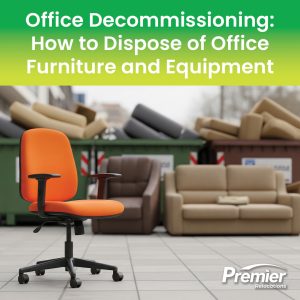
When relocating or closing an office, transferring your active workspace is only half the battle. One of the most critical and often overlooked steps in commercial moving is determining what to do with the desks, electronics, partitions, and fixtures you won’t be bringing along.
Office decommissioning is the process of clearing out your current facility, responsibly disposing of or rehoming unwanted assets, and restoring the leased space back to its original condition. Approaching this systematically helps protect your bottom line, avoid landlord penalties, and support environmental sustainability.
Here is a step-by-step guide on how to handle office furniture and equipment disposal efficiently.
1. Liquidate Usable Furniture and High-Value Assets
Desks, ergonomic chairs, modular cubicles, and conference room tables often retain significant resale value. Instead of treating surplus items as junk, turn them into partial cost recovery for your move.
- Work with a Commercial Liquidator: Partnering with an office furniture liquidator is often the fastest route for large volumes of furniture. They can assess your inventory, buy in bulk, and handle extraction logistics.
- Sell directly: If you have high-end or specialty equipment in smaller quantities, selling directly to local businesses or through commercial resale channels can yield a higher return.
- Plan Early: Furniture liquidation takes time. Initiating this process 60 to 90 days before your move date gives you adequate leverage to secure fair market prices rather than rushing into last-minute clearance discounts.
2. Donate Working Items to Nonprofits and Community Groups
If resale isn’t viable or practical for certain items, donating them keeps usable furniture out of landfills while supporting your community and providing potential tax benefits. Local charities, schools, community centers, and startups are frequently looking for office desks, seating, and storage cabinets.
- Confirm Acceptance Rules: Always contact recipient organizations weeks before moving day to verify their current needs, accepted item conditions, and pickup capabilities.
- Coordinate Pickup Logistics: Some organizations offer scheduled pickup services for bulk donations, while others require drop-off. Ensure this is factored into your final logistics timeline.
3. Recycle Unwanted Equipment and Securely Dispose of E-Waste
Items that are damaged, outdated, or unfit for donation should be diverted to responsible recycling streams whenever possible.
- Metal & Material Recycling: Items like metal filing cabinets, steel framing, fixtures, and bulk cardboard packaging can easily be processed at certified municipal or commercial recycling facilities.
- Certified E-Waste Disposal: Computers, monitors, servers, copy machines, and office phones contain toxic materials and cannot be tossed into regular trash bins. Partner with a certified electronic waste (e-waste) vendor.
- Data Security & Shredding: Before turning over any IT hardware or server equipment, ensure all sensitive company and client data is permanently wiped or hard drives are physically destroyed in compliance with industry data security standards.
4. Restore the Property for Lease Handover (Make-Good Requirements)
Before handing the keys back to your property manager or landlord, carefully review your original lease contract, specifically the “make-good” or restoration clauses. Failing to meet lease specifications can lead to delayed deposit returns or costly landlord-assessed fees.
Typical lease surrender obligations include:
- Complete removal of all furniture, debris, and low-voltage wiring (cables, telecom wires).
- Disconnecting fixture installations and repairing wall, ceiling, or floor damage.
- Patching drywall, repainting touched-up areas, and conducting deep facility cleaning.
Scheduling removal, repair, and cleaning teams well in advance prevents last-minute scrambles right before your lease officially expires.
Simplify Your Commercial Relocation with Premier Relocations
Office decommissioning doesn’t have to be overwhelming. By starting early and organizing your inventory into categories to sell, donate, recycle, or remove, you can minimize waste, lower logistics costs, and ensure a flawless landlord walkthrough.
At Premier Relocations, we specialize in comprehensive commercial moving and logistics coordination. Whether you’re moving down the street or managing a complex corporate transition, our experienced team ensures every step of your move is handled with precision and care.
Planning an office relocation? Contact Premier Relocations today for a no-cost estimate and let’s discuss your commercial moving needs!
